
Dr Julia Schwab
Leverhulme Trust Early Career Fellow
Museum of Natural History
Dr Julia Schwab's research focuses on evolutionary transitions, particular the land-to-water transition in vertebrates. Studying their anatomy and morphology can give insights into locomotion pattens, habitat and lifestyles of ancient animals. Her research particularly explores the secondarily aquatic transition of marine crocodylomorphs (thalattosuchians) and carnivorans (seals, sea lions, otters) to explore how their sensory (e.g., inner ear labyrinth, brain endocast) and locomotory systems (e.g., limbs, vertebrae) adapted as these animals moved to an ocean lifestyle.
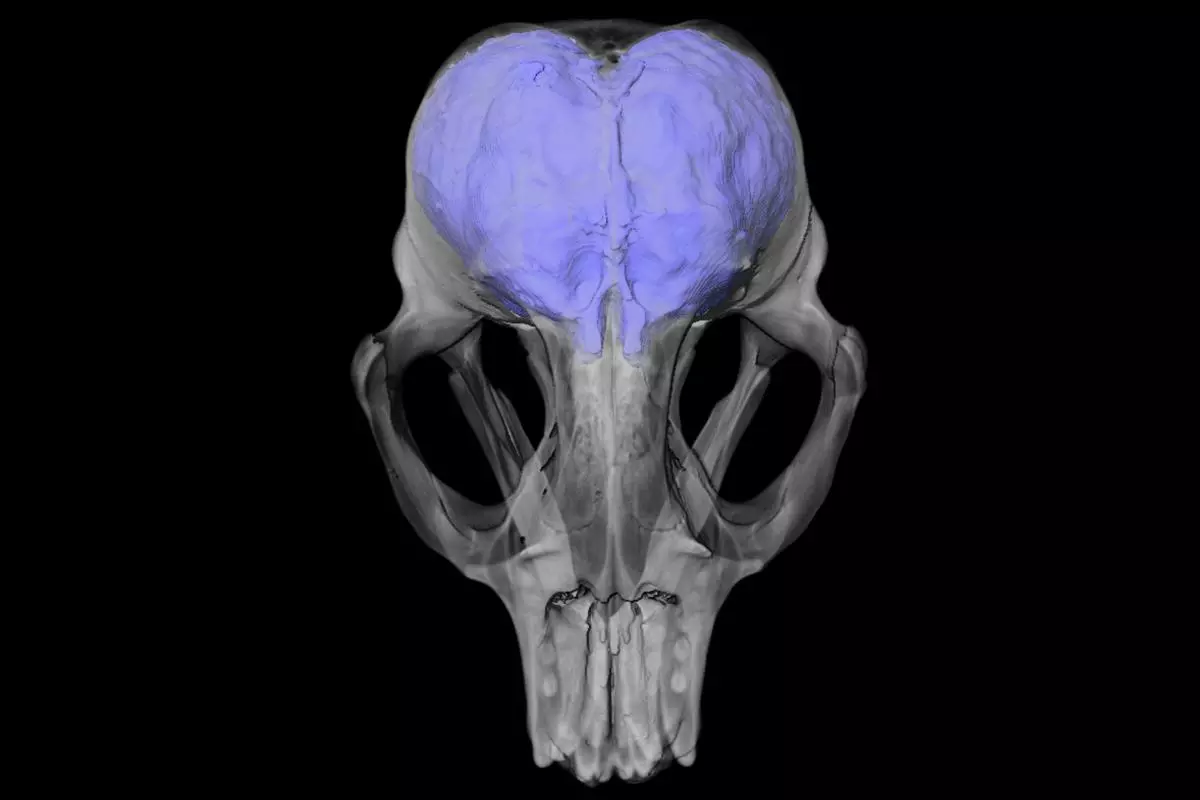
Transparent skull with brain endocast in blue of a Northern elephant seal (Mirounga angustirostris).
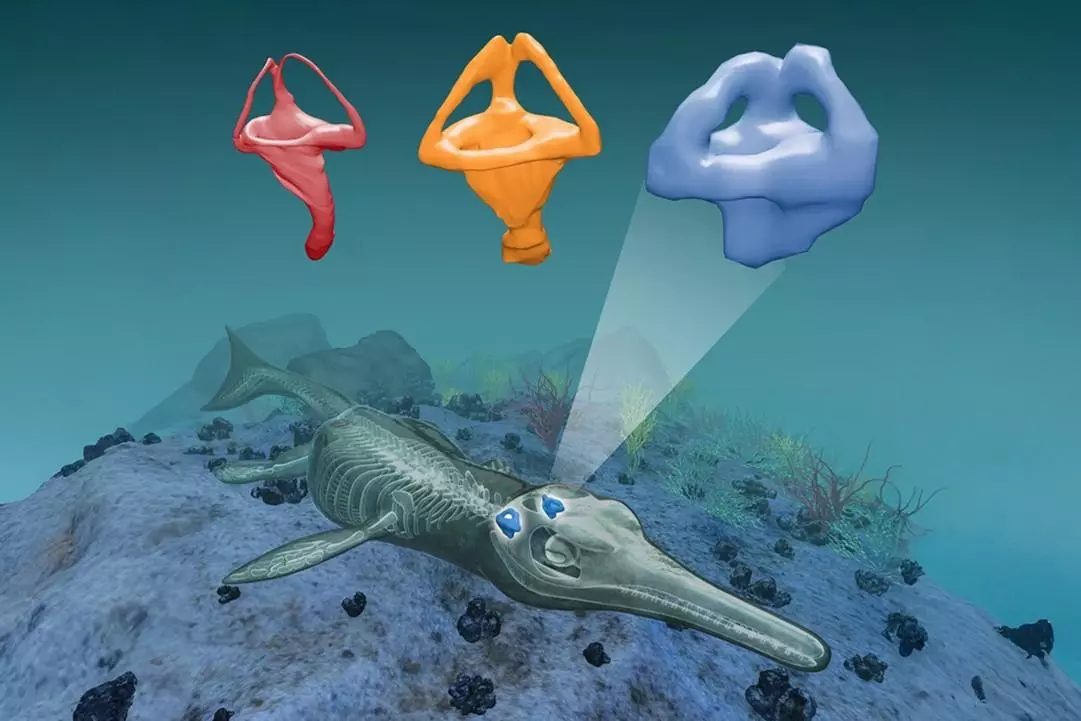
Artist's conception of a Jurassic marine crocodylomorph (metriorhynchid). The shapes represent the evolution of the inner ear (bony labyrinth) from terrestrial (left) through semiaquatic (middle) to pelagic (right). Credit: Bryan Christie Design.
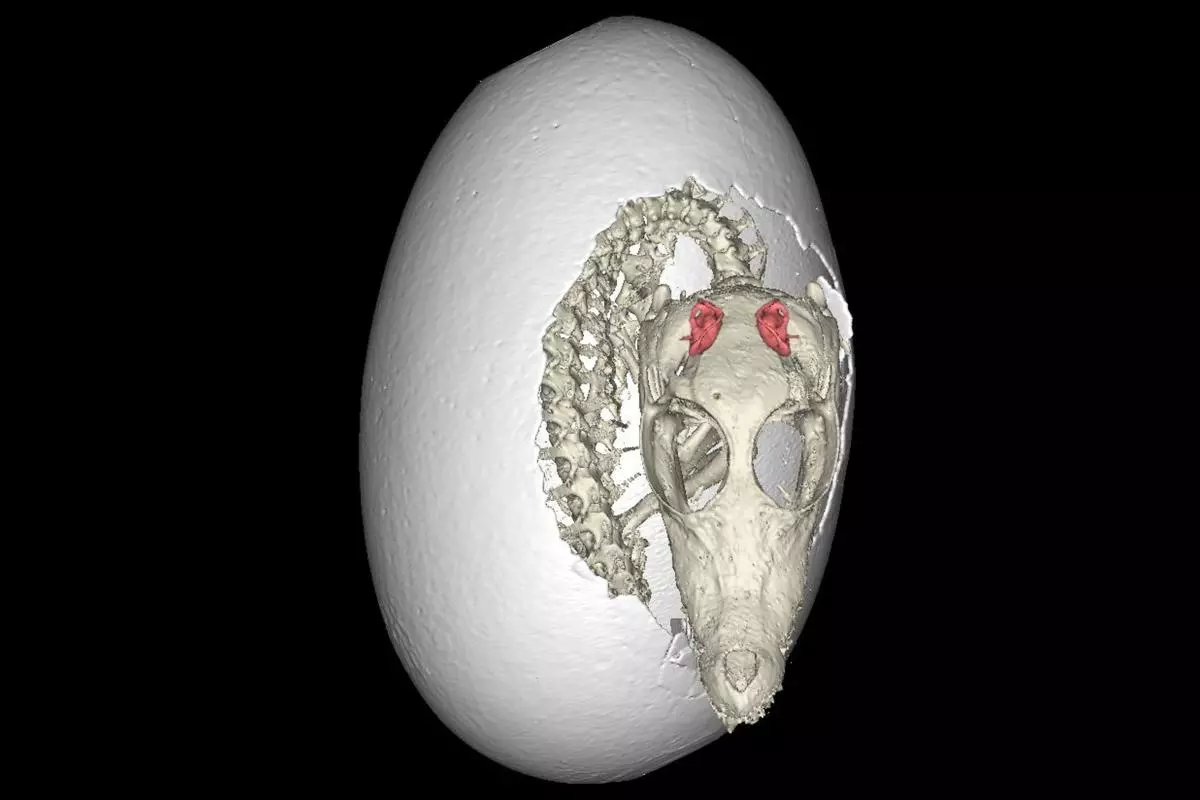
Bony labyrinth shown a hatching Saltwater crocodile (Crocodylus porosus) with the inner ear labyrinth in pink. Based a on computed tomography scan (CT-scan).